Benefits of Emotion Regulation DBT Worksheet Template
Further, this resource will also result in various advantages, improving the care delivery experience for both you and your clients. Some of these benefits include:
Engage the client in their own care
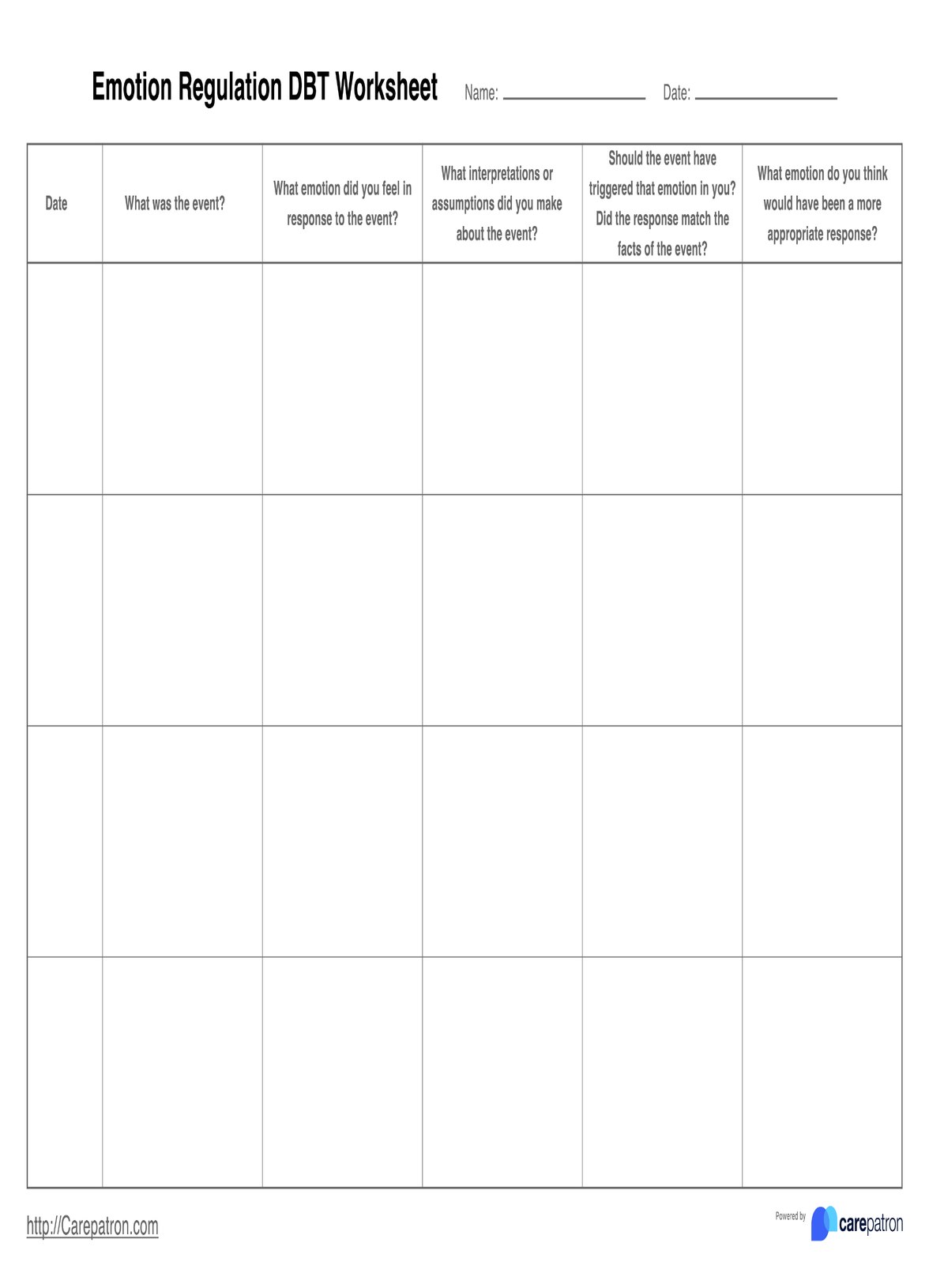
One of the most important benefits of using worksheets is their ability to engage clients within their own care. This worksheet encourages clients to be open and honest about their emotional experiences. It allows them to consider the motivations, outcomes, and potential coping skills associated with these emotions, encouraging them to be assertive and aware of the role they play in emotion regulation.
Develop a more effective treatment plan
We recommend distributing this worksheet to your clients during the early phase of their treatment. The information included on the completed worksheet will give you an insight into the client’s emotion regulation abilities, and specific areas that require improvement. Together, you can use the client’s responses to guide your session discussions and develop a treatment plan.
Identify useful coping skills
Our emotion regulation DBT worksheet asks clients to consider the coping skills that they currently employ. Using these responses, as well as your professional opinion, you can introduce the client to new strategies and focus on strengthening skills they already possess. Managing emotion regulation requires wielding a suite of different coping mechanisms, and this worksheet is one of the best tools for guiding your clients toward these.
Empower clients to take control of their emotions
At the end of the day, therapeutic treatment will be infinitely more effective if the client is committed. Involving them in their own care demonstrates the autonomy they have over their own life and shows them that they have the ability to overcome whatever issues they may be facing. As you equip clients with the skills required to regulate emotions, they will be empowered to strengthen their relationships, work toward their goals, and improve their general quality of life.
Foster a meaningful relationship
Healthy client/therapist relationships are the key to good care delivery. You want to ensure your client is in an environment where they feel safe and heard. When a client returns a completed worksheet to you, it is your responsibility to respond with empathy and kindness, so your client understands you have their best interests at heart.