Gratitude is an essential part of mental health. It might be hard to believe at first, especially if one is mired in negative thoughts and behavioral patterns that prevent them from practicing thankfulness, even if for the smallest things.
Suppose you're looking to help your clients develop a sense of gratitude and are seeking tools such as free gratitude journals and similar worksheets. In that case, you can download our free printable gratitude worksheet to help your clients do so through the simple act of writing!
Read our guide to learn more about why gratitude is important for one's mental health!
## **Why is gratitude important to one's mental health?**
It might be hard to believe, but practicing gratitude goes beyond just saying "thank you" to people. Gratitude can actually have a positive impact on one's mental health. Studies have shown that people who consciously practice gratitude, whether it's gratitude for the people in their life, for living another day, for music, or what have you, have better moods, feel happier, and can ward off depression and anxiety symptoms (Seligman et al., 2005).
By taking a few moments to reflect on their lives and express gratitude, people can redirect their thoughts to the positive aspects of their lives. This makes it easier for them to work towards maintaining happiness and calm, and instill the motivation to healthily seek positivity even through trying times. Some examples of things people can be grateful for that go beyond favors and transactions include the following: kindness, loved ones and family (one's parents, one's children), one's teachers or students, meeting another person, being able to have fun, being on a roll with coming up with good ideas, the beauty of nature, and other good things.
Having a daily gratitude practice that involves a variety of gratitude activities can help develop positive and healthy coping skills (Diniz et al., 2023). An example of such an activity is going on a gratitude scavenger hunt, where people look for things that they're thankful for based on prompts. Another is engaging with free gratitude worksheets that can easily be found online!
## **What is a Gratitude Worksheet?**
Practicing gratitude can bring powerful benefits, from boosting happiness to strengthening relationships. Best of all, it's easy and free to get started. Encouraging clients to express gratitude can help lower stress, improve mood, and promote a positive mindset. Like any habit, consistency is key—regularly expressing gratitude makes it easier to notice life's positives.
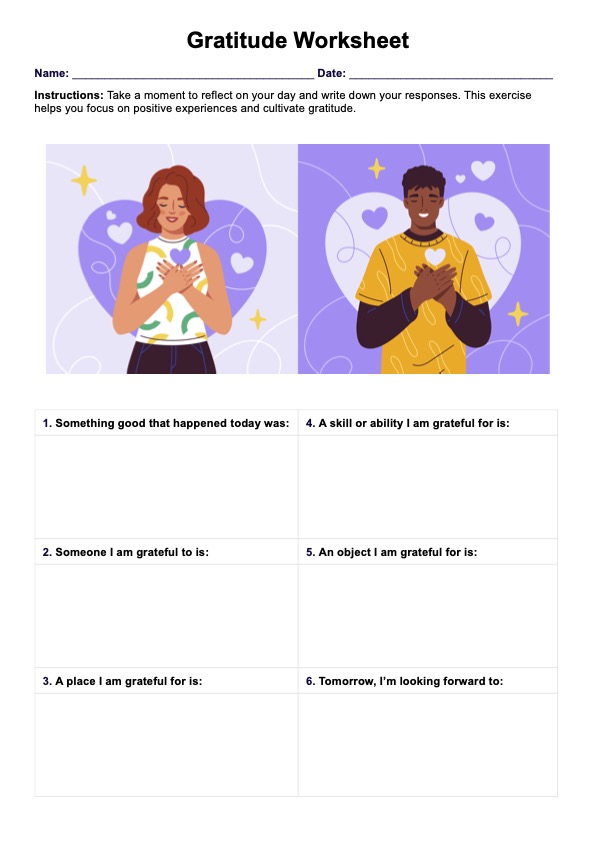
A Gratitude Worksheet includes gratitude exercises to help clients incorporate gratitude practice into their daily routines. With simple prompts, clients can reflect on the people, places, and experiences that bring them joy. Such worksheets come in various forms, too. Some take the form of a gratitude journal. There is also a kind of worksheet called gratitude leaves, where kids can write down anything they're grateful for on leaves, cut them out, and attach them to a tree.
In addition to worksheets, you can encourage clients to start a gratitude jar, where they add a note each day about something they're grateful for or write a gratitude letter to someone who has made a difference in their life.
Writing down these reflections helps reinforce positive emotions and increases mindfulness, and it's a simple and effective way to practice and reflect on gratitude. Over time, practicing gratitude can build positive attitudes and outlooks, enhance emotional resilience, and overall well-being.
Gratitude Worksheets can be especially helpful when clients struggle to recognize the positives in their lives or seem stuck in a cycle of negativity. By guiding them to reflect on specific people, experiences, and things they appreciate, these worksheets encourage a shift in perspective.
On your part, these worksheets can save you from spending too much time formatting and creating your own resources.
## **How to use this Gratitude Worksheet PDF**
Our Gratitude Worksheet is available for professional or personal use. It's a simple worksheet that asks people to focus and think about some of the things they're grateful for (not all the things, because that might be overwhelming at the moment, and we want the experience of answering our worksheet to be relaxing). We recommend using our worksheet when you're at the point in your program where clients should be thinking deeply about what they can do to improve their mental health.
### **Step 1: Download the Gratitude Worksheet**
Click "Download" to get a free fillable PDF copy of this worksheet. If you want to further customize this according to your client's needs, click "Use template" to open it within the Carepatron platform.
### **Step 2: Provide the worksheet to your client**
Next, share the worksheet with your client as a printed copy or a digital file. This Gratitude Worksheet is a free PDF download with interactive text boxes so clients can type their responses directly into the file. If they prefer, you can print it out and have them fill it out by hand. If you're using our Carepatron platform, you can easily send it to them digitally for convenient access.
The prompts they need to answer are the following:
- Something good that happened today was...
- Someone I'm grateful to is...
- A place I'm grateful for is...
- A skill or ability I'm grateful for is...
- An object I'm grateful for is...
- Tomorrow, I'm looking forward to...
### **Step 3: Discuss your client's responses**
After your client completes the Gratitude Worksheet, take time to discuss their responses and insights. This conversation can help them deepen their awareness of what they appreciate and identify patterns in their thinking. Encouraging reflection on their answers can also reinforce positive emotions and support their overall growth in therapy.
The topics and thoughts raised as your client completed this Gratitude Worksheet can serve as a great conversation starter or topic for your next session. These questions also serve as effective prompts for your client to practice gratitude during their sessions with you.
You can even encourage them to revisit this worksheet during your later sessions, or on their own several weeks, months, or even years down the line. By having clients complete this worksheet at the start of their journey and revisiting it later, you can track changes in their mindset over time. Seeing their progress in black and white can be an encouraging reminder of how far they've come.
### **Common activities to help clients cultivate gratitude**
One of the biggest challenges in therapy is helping clients maintain progress outside of sessions. This worksheet provides a simple way for them to practice gratitude daily, reinforcing positive thinking and mindfulness in their everyday lives while boosting their self-esteem.
Beyond this specific worksheet, they can do the following in their own time:
- Create a [gratitude journal](https://www.carepatron.com/templates/gratitude-journal/) to help them write down things they're grateful for each day. Although our worksheet asks students to do something similar, it isn't exactly a journal. This will make them more mindful about the things they're grateful for.
- They can write letters to the people they're grateful for in their lives, especially those who have made a significant and positive impact on them. Whether they want to give the letters to those people will be up to your clients, but encourage them to do so because it might strengthen their relationships, confidence, and even inspire recipients to do the same.
- They can [practice meditation](https://www.carepatron.com/templates/5-minute-meditation-scripts/) (not mindfulness) that focuses on what they're grateful for. This helps them achieve a state of calm by reflecting on what and who they're thankful for.
## **References**
Diniz, G., Korkes, L., Tristão, L. S., Pelegrini, R., Bellodi, P. L., & Bernardo, W. M. (2023). The effects of gratitude interventions: a systematic review and meta-analysis. Einstein (São Paulo), 21(21). https://doi.org/10.31744/einstein_journal/2023rw0371
Seligman, M. E. P., Steen, T. A., Park, N., & Peterson, C. (2005). Positive Psychology Progress: Empirical Validation of Interventions. American Psychologist, 60(5), 410–421. https://doi.org/10.1037/0003-066x.60.5.410
Commonly asked questions
Practicing gratitude involves making a conscious effort to acknowledge the people and things in your life that you appreciate. This could be as simple as appreciating good weather or a kind gesture, and involves taking a moment to be mindful of your gratitude and why you feel grateful.
This is ultimately up to you and your client, but to get into the habit of practicing gratitude, this worksheet can be done daily with your client, finding new things to be grateful for.
This worksheet can be completed at any time, but as a reflective exercise, completing it in a quiet moment in the evening or afternoon can be a good way to wind down and reflect on the day that was.