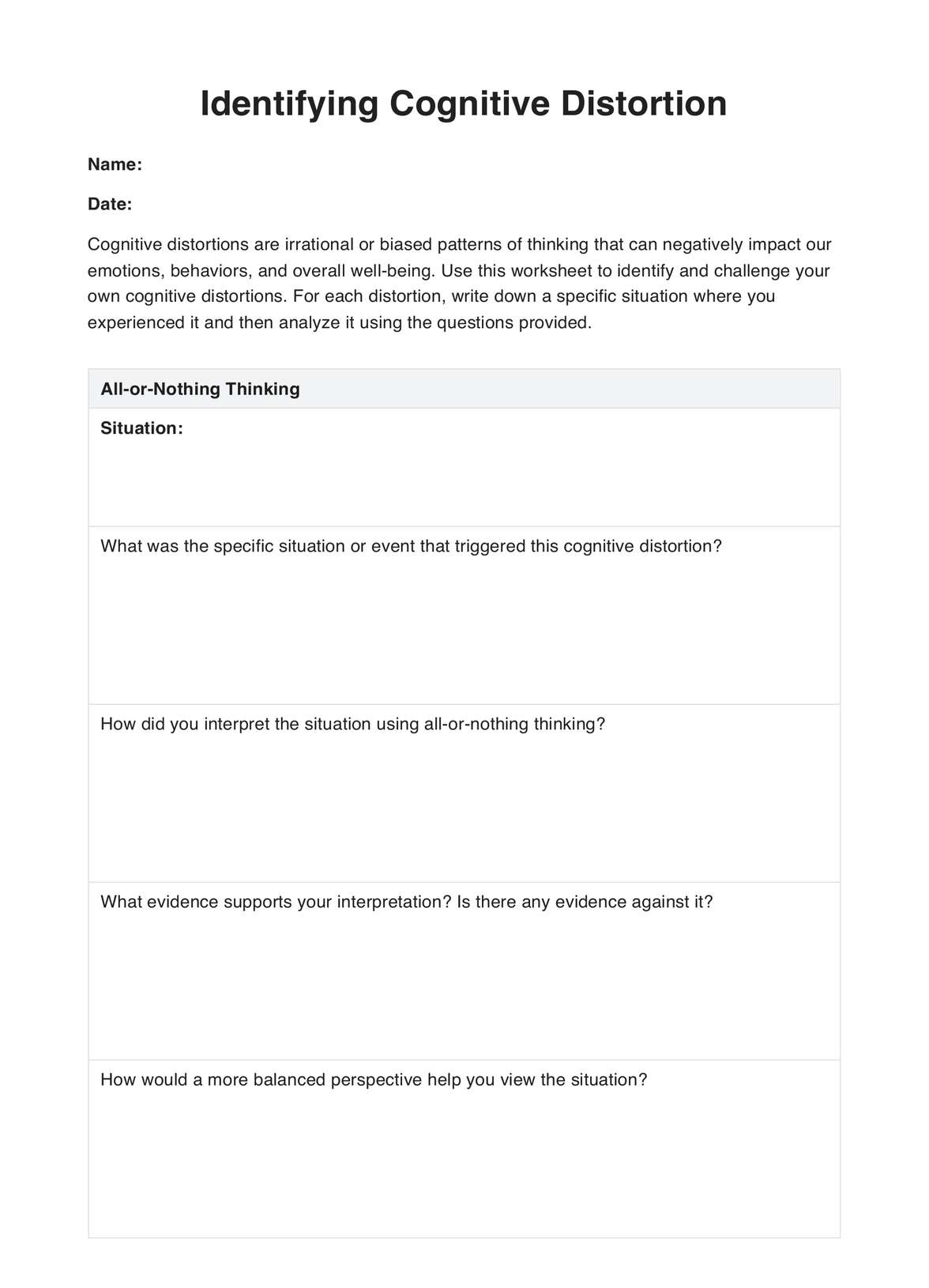


What are cognitive distortions?
Cognitive distortions are distorted thinking patterns that can negatively impact our mental health. These distorted thoughts often stem from negative thinking, and they can lead to emotional disorders such as depression, anxiety, and low self-esteem (Rnic et al., 2016).
One of the most common cognitive distortions is all-or-nothing thinking, where someone sees things in absolute terms without considering any gray areas or middle ground. This type of distorted thinking can be harmful, leading to extreme thoughts and behaviors, such as feeling like a failure when one makes a mistake or seeing others as completely good or bad.
Therapists can use Cognitive Distortions PDF worksheets to help individuals recognize and challenge these distorted thought patterns. These worksheets provide a range of exercises to help individuals become aware of their irrational thinking patterns and how to challenge them.
By using Cognitive Distortions PDF worksheets, individuals can develop healthier thinking habits, leading to improved mental health and well-being. They can also more effectively manage their stress and anxiety levels and build better relationships with others.
Identifying cognitive distortions
Recognizing our cognitive distortions is essential in understanding and managing them. Some common cognitive distortions include (Harvard Health Publishing, 2022):
Overgeneralization
This is when we apply one negative experience to all aspects of our lives. For example, after a bad job interview, someone may think they are terrible at interviews and will never find a job.
Mental filter
This occurs when we focus only on the negative aspects of a situation and ignore any positives. For instance, someone who receives mostly positive feedback on a project may only focus on one negative comment.
All-or-nothing thinking
As mentioned earlier, this is when we see things in black and white without considering any shades of gray. It can lead to extreme thoughts and behaviors, such as giving up completely after making one mistake.
Jumping to conclusions
This distortion involves making assumptions without sufficient evidence. For example, someone may assume their friend is mad at them without asking or finding out.
Personalization
This occurs when we take responsibility for things not in our control. It can lead to feelings of guilt and shame, even when they are unwarranted.
Effects of cognitive distortions on mental health
Cognitive distortions can hurt our mental health and well-being. They can lead to negative thought patterns, which can contribute to emotional disorders like depression and anxiety. These distorted thinking patterns can also affect our self-esteem and overall mood (Rnic et al., 2016).
For example, someone who constantly engages in all-or-nothing thinking may feel like a failure when imperfect, leading to low self-worth and feelings of inadequacy. This can also perpetuate a never-ending pattern of negative thinking and self-fulfilling prophecies.
Cognitive therapy options, cognitive restructuring, and new mood therapy focus on identifying and challenging these distorted thoughts to improve overall mental health. These therapies often use tools like the Beck Depression Inventory to assess thought patterns and track progress.
Looking for a relevant resource? Check out our Cognitive Distortions Worksheet Template.